

Here's why a New Air Conditioner Cost So Much More Than It Used To?

Birch's Air: “How Much Does a New AC System Cost in Southwest Florida in 2026?” The best way to look at installing a new AC system.
Here's why a New Air Conditioner Cost So Much More Than It Used To?
Birch's Air: “How Much Does a New AC System Cost in Southwest Florida in 2026?” The best way to look at installing a new AC system.
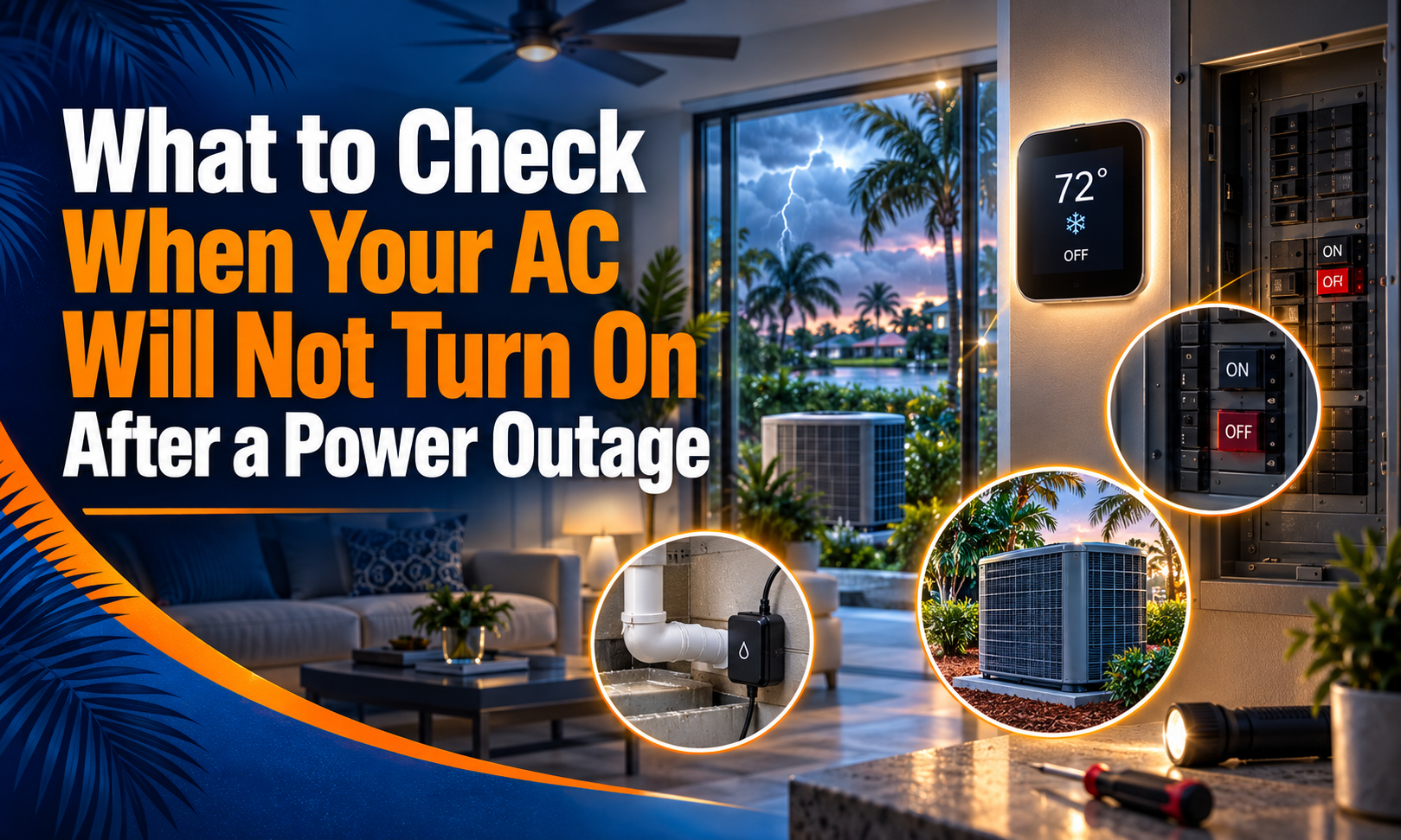
Power went out? But your AC didn't turn on? Here's What to Check When Your AC Will Not Turn On After a Power Outage in SWFL
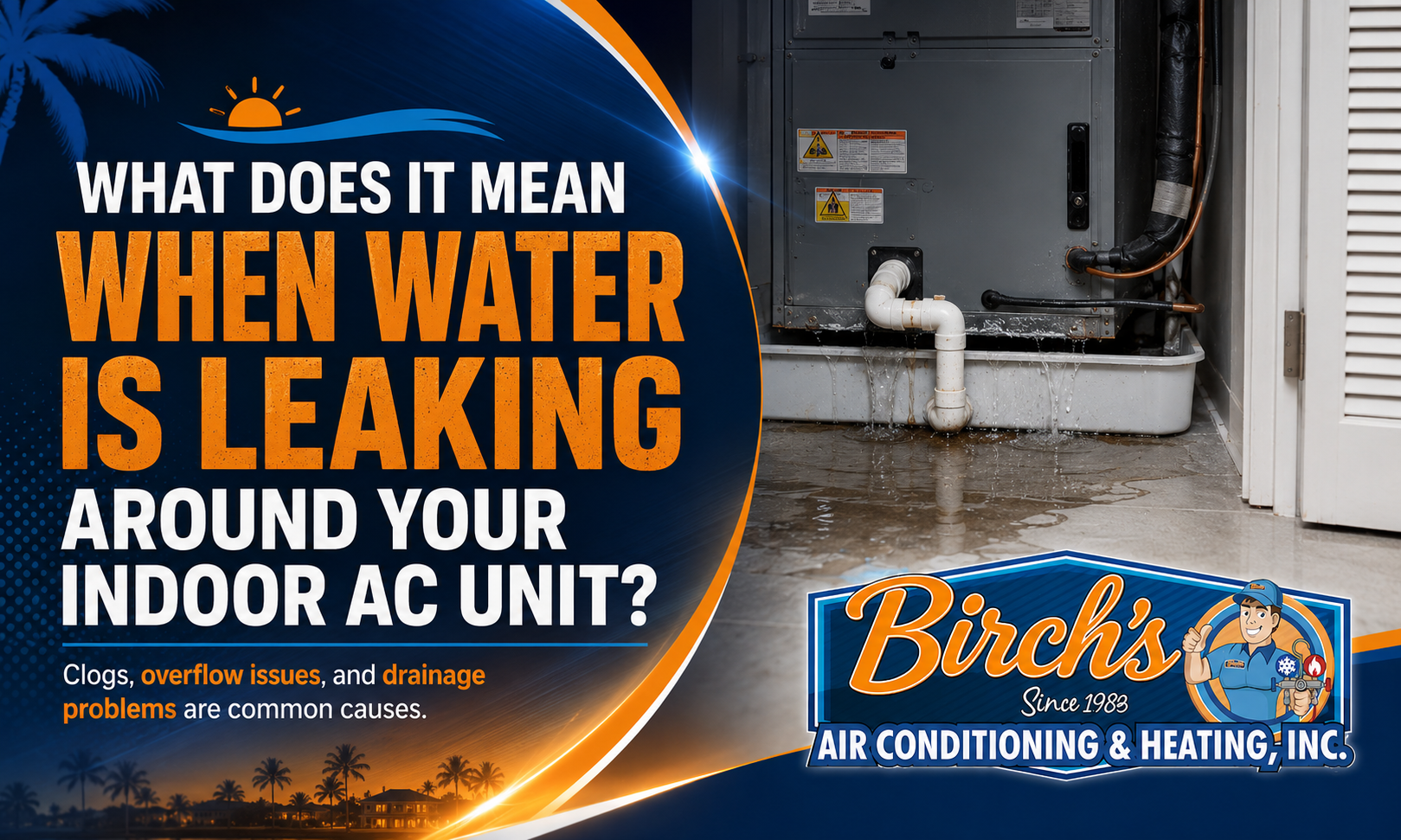
What Does It Mean When Water Is Leaking Around Your Indoor AC Unit? Finding water around your indoor air-conditioning unit can be alarming, especially when the air handler is located in an attic, closet, garage, or above a finished ceiling. Even a small amount of water can damage drywall, flooring, insulation, furniture, or nearby electrical components if the source is not corrected. Your AC system naturally produces condensation while removing heat and humidity from the home. That moisture should collect in a drain pan and flow safely outside through a condensate drain line. When water appears around the indoor unit, something has interrupted that drainage process. Here are the most common causes and what homeowners should do next. A Clogged Condensate Drain Line A blocked drain line is one of the most frequent causes of water around an air handler in Southwest Florida. As the AC removes moisture from humid indoor air, condensation flows through a narrow PVC drain line. Algae, dust, dirt, and biological buildup can gradually restrict the pipe until water can no longer drain properly. The backed-up water may overflow from the primary drain pan or trigger a float switch that shuts the AC off. Signs of a clogged drain line can include: Water around the indoor unit A full drain pan Musty odors Gurgling near the drain An AC system that suddenly stops running Water coming from an emergency drain outlet Because air conditioners in Port Charlotte, Punta Gorda, and North Port operate so frequently, their drainage systems handle moisture for much of the year. This gives algae and debris more opportunities to accumulate. A Frozen Evaporator Coil Is Thawing Water may also appear when ice on the evaporator coil begins to melt. The indoor coil becomes very cold during normal cooling. If airflow is restricted or the refrigerant system is not operating correctly, the coil temperature can fall below freezing. Moisture then freezes onto the coil instead of draining normally. Once the system shuts off or the ice begins to thaw, the amount of water may overwhelm the drain pan. A frozen coil can result from: A heavily clogged air filter A dirty evaporator coil Closed or blocked vents A blower motor problem Low refrigerant A refrigerant leak Restricted ductwork You may also notice weak airflow, ice on the refrigerant line, long cooling cycles, or warm air from the vents. If you see ice, turn off the cooling mode and allow the system to thaw. Do not scrape the ice away or continue running the AC. If it freezes again, professional testing is needed to find the underlying cause. The Drain Pan May Be Cracked or Rusted The drain pan sits beneath the evaporator coil and collects condensation. Over time, a metal pan can corrode, while a plastic pan may crack or become damaged. A deteriorated pan may leak even when the drain line is open. This problem is more common in aging systems, especially when the indoor unit is exposed to persistent moisture. Salt air and humid conditions can also contribute to corrosion in coastal parts of Southwest Florida. Water may leak slowly from a small crack or spread from multiple rusted areas. Placing towels around the unit may control the visible water temporarily, but it will not repair the damaged pan.A technician can inspect both the primary and secondary pans and determine whether one can be repaired or needs replacement. A Condensate Pump May Have Failed Some HVAC systems cannot rely entirely on gravity to drain condensation. Instead, they use a small condensate pump to move the water to an appropriate discharge point. If the pump fails, becomes clogged, loses power, or develops a stuck float, water can overflow from its reservoir. You may hear the pump running continuously, notice that it does not operate at all, or see water collecting nearby. Condensate pumps contain electrical components, so avoid opening or testing one while it is connected to power. A technician can determine whether the pump needs cleaning, repair, or replacement. The Drain Line May Be Disconnected or Improperly Sloped A drain line does not need to be fully clogged to cause a leak. Loose fittings, cracked PVC, failed seals, or disconnected sections can allow water to escape before it reaches the outdoor outlet. A line without the proper downward slope may also hold water and develop repeated blockages. Common drainage problems include: Sagging sections of pipe Loose joints Improper venting Poorly positioned cleanout fittings An outlet blocked by soil or landscaping Missing insulation around cold piping If the same drain line repeatedly backs up after being cleared, installation or alignment may be contributing to the problem. Excess Condensation Can Form on the Unit Sometimes water forms on the outside of the air handler, refrigerant line, or ductwork rather than leaking from the drain pan. This can happen when cold surfaces are exposed to warm, humid air. Missing insulation, damaged vapor barriers, air leaks, and excessive indoor humidity can all produce condensation. You may see water beading on the cabinet or dripping from an insulated refrigerant line. Moisture may also form around supply ducts running through a hot attic. This type of sweating should not be ignored. Persistent condensation can damage insulation and surrounding materials while encouraging musty odors and microbial growth. What Should You Do When You Find Water? Start by turning off the air conditioner if water is actively spreading, approaching electrical components, or leaking through a ceiling. Then: Move belongings away from the area. Use towels or a wet vacuum to remove standing water. Check whether the air filter is severely clogged. Look for visible ice on the coil or refrigerant line. Check whether the drain pan is full. Inspect the outdoor drain opening for obvious debris. Do not pour chemical drain cleaner into the condensate line. These products may damage HVAC materials and create additional safety concerns for the technician who later opens the system. Avoid removing service panels or reaching near wiring, motors, or controls. When Does an AC Water Leak Require Professional Service? Call an HVAC technician when the leak returns, the drain pan remains full, the coil is frozen, the AC will not restart, or water is near electrical equipment. Prompt service is especially important when an air handler is installed in an attic or above a ceiling. A small drainage issue can cause substantial property damage before it becomes visible inside the living space. A professional inspection may include checking the condensate line, drain pans, float switches, evaporator coil, blower, refrigerant system, insulation, and condensate pump. The goal should be to identify why the water escaped rather than simply removing the visible moisture. Have the Source of the Leak Properly Diagnosed Water around an indoor AC unit can come from a clogged drain, frozen coil, cracked pan, failed pump, damaged pipe, or excessive condensation. Since several problems can produce similar symptoms, a careful inspection is often the safest way to prevent the leak from returning. Birch’s Air provides condensate drainage, air-handler, and AC repair services throughout Charlotte, Lee, and Sarasota counties. If you discover water around your indoor unit, contact Birch’s Air to have the source inspected and corrected before it damages the surrounding area.
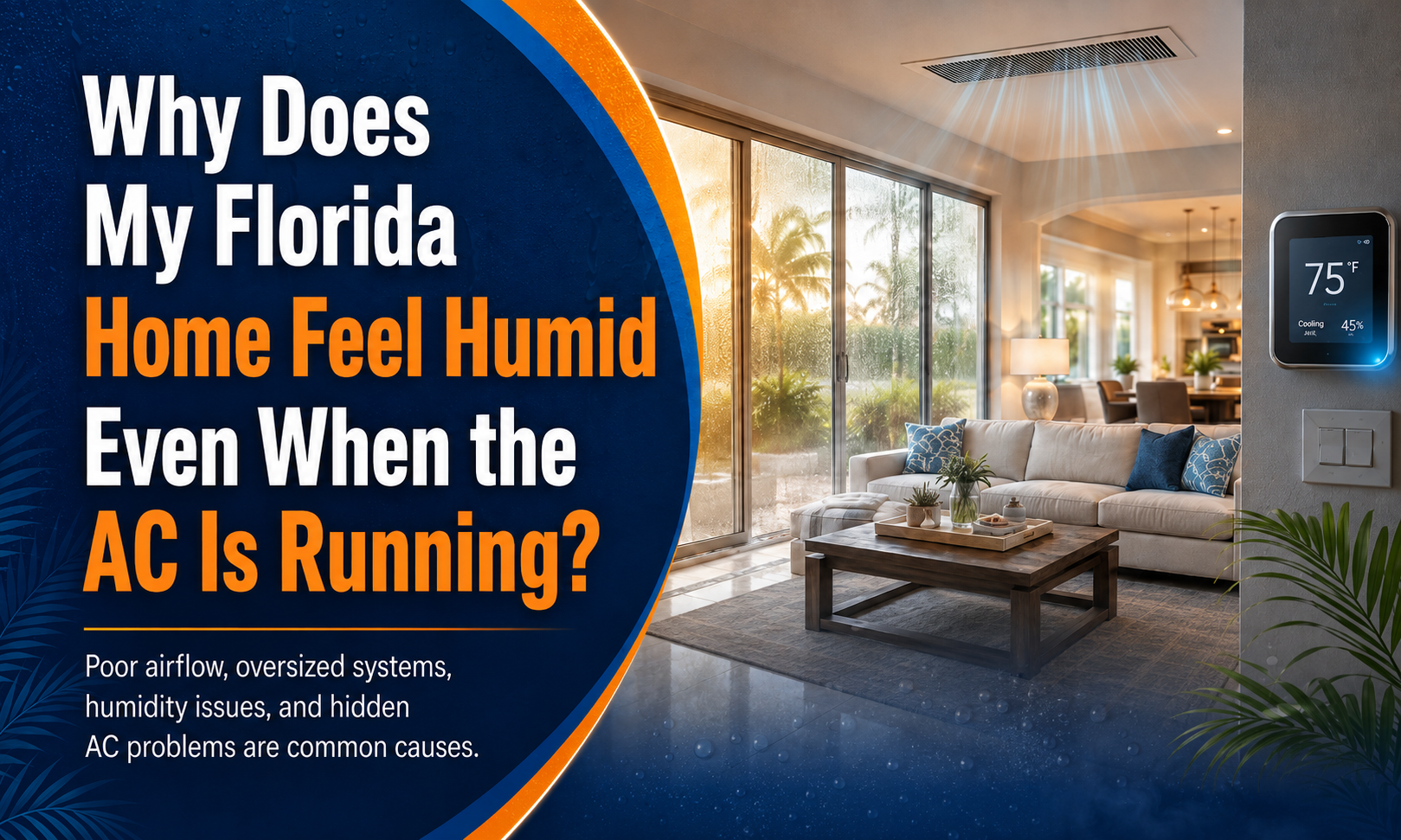
Why Does My Florida Home Feel Humid Even When the AC Is Running? Your air conditioner may be running, the thermostat may show the correct temperature, and the house may still feel sticky, damp, or uncomfortable. This is a common frustration in Florida homes. Cooling the air and removing humidity are related, but they are not exactly the same process. An AC system can lower the temperature without removing enough moisture, especially when it is short cycling, oversized, poorly maintained, or affected by airflow and ductwork problems. If your home feels humid even while the AC is operating, the system may need more than a lower thermostat setting. How Your Air Conditioner Removes Humidity As warm indoor air passes over the cold evaporator coil, moisture condenses on the coil and drains away through the condensate system. For this process to work properly, the air conditioner must run long enough to move a sufficient amount of air across the coil. If the cooling cycle ends too quickly, the system may reach the thermostat setting before it removes enough moisture. That is why a home can be 74 degrees and still feel uncomfortable. High indoor humidity may also make the air feel warmer than it actually is, encouraging homeowners to lower the thermostat and increase energy use without solving the underlying problem. The AC System May Be Too Large for the Home Many homeowners assume that a larger air conditioner will cool the house better. In reality, an oversized system can create comfort and humidity problems. A system that is too large may cool the home very quickly and then shut off. These short cycles may not last long enough for the evaporator coil to remove adequate moisture. Common signs of an oversized system include: Frequent starting and stopping Uneven temperatures Rooms that feel cool but clammy Higher-than-expected humidity Sudden temperature swings Increased wear on electrical and mechanical components Proper AC sizing should be based on a professional load calculation, not simply the square footage of the home or the size of the previous unit. The calculation should consider insulation, windows, ceiling height, sun exposure, construction materials, air leakage, and other factors that affect heat and moisture. Short Cycling Can Limit Moisture Removal An oversized system is not the only cause of short cycling. The AC may also turn on and off too frequently because of: A thermostat problem Restricted airflow A frozen coil An electrical issue A clogged filter A failing component Incorrect refrigerant conditions When cooling cycles are too short, the system spends less time dehumidifying the air. You may notice that the AC starts repeatedly throughout the day, but the house never feels consistently comfortable. Short cycling can also place additional strain on the compressor, capacitor, blower motor, and other components. If the system frequently shuts off after only a few minutes, it should be inspected rather than treated as normal operation. Poor Airflow Can Affect Humidity Control Your air conditioner needs the correct amount of airflow to cool and dehumidify effectively. A severely clogged filter, dirty evaporator coil, blocked return vent, weak blower motor, or restricted duct system can interfere with the movement of air across the indoor coil. Too little airflow may cause the coil to become excessively cold and freeze. Once the ice melts, the system may produce additional water while still struggling to control indoor humidity. Check the air filter and make sure supply and return vents are open and unobstructed. If airflow from the vents remains weak, the problem may require professional testing. Installing a filter that is too restrictive can also contribute to airflow problems. The best filter is one that provides effective filtration without exceeding what the HVAC system can handle. Leaky Ductwork Can Pull Humid Air Into the System Duct leaks can affect both cooling and humidity. When return ducts leak in an attic, garage, or other unconditioned area, the system may pull hot, humid air into the ductwork. Supply leaks can allow cooled air to escape before it reaches the living areas. This makes it harder for the AC to maintain comfortable indoor conditions. Possible signs of duct leakage include: Uneven temperatures Weak airflow Dust around vents High electric bills Musty odors Rooms that feel more humid than others Long system run times Duct problems are especially important in older Florida homes where connections, insulation, or flexible duct materials may have deteriorated over time. A visual inspection of exposed ductwork may reveal obvious damage, but many leaks are hidden in attics or enclosed spaces. The Thermostat Setting May Be Contributing Thermostat settings can influence how the home feels. Make sure the fan is set to “Auto” rather than “On.” When the fan runs continuously, it may blow moisture from the wet evaporator coil back into the house after the cooling cycle ends. The “Auto” setting allows the blower to stop when the cooling cycle finishes, giving condensation time to drain away. Avoid making large temperature adjustments throughout the day. Constantly raising and lowering the setting can create inconsistent run times and comfort levels. The thermostat location also matters. A thermostat placed near a supply vent, exterior door, sunny window, or heat-producing appliance may not accurately represent conditions throughout the home. The AC May Need Maintenance or Repair Dirty coils, improper refrigerant conditions, blower problems, drainage issues, and aging components can all reduce the system’s ability to control moisture. An AC system does not need to be completely broken to perform poorly. It may still cool the home while operating less effectively than it should. A professional inspection may include checking: Temperature and humidity levels Evaporator and condenser coils Refrigerant performance Blower speed and airflow Filter condition Thermostat operation Duct leakage Drainage and condensate removal Electrical and mechanical components The goal is to determine whether the humidity is caused by the equipment, duct system, building conditions, or a combination of factors. Other Sources of Indoor Humidity Not every humidity problem begins with the air conditioner. Moisture can enter the home through air leaks around doors and windows, damaged weatherstripping, plumbing leaks, unvented bathrooms, or gaps in the building envelope. Frequent cooking, showering, indoor laundry, and opening exterior doors can also add moisture. Homes that sit vacant for part of the year may develop humidity problems when the thermostat is set too high or the AC is turned off completely. Seasonal residents should maintain enough cooling and moisture control to protect furnishings, drywall, flooring, and other materials. In some homes, a whole-home dehumidifier may be appropriate. However, additional equipment should not be used to hide an AC or ductwork problem that can be repaired. When to Schedule a Humidity Inspection Consider professional service if the home regularly feels clammy, windows develop condensation, musty odors persist, or indoor humidity remains high despite normal AC operation. Birch’s Air can evaluate the air-conditioning system, thermostat, airflow, drainage, and ductwork to determine why the home is not drying properly. The company provides HVAC and indoor-air-quality services throughout Charlotte, Lee, and Sarasota counties. A careful diagnosis can help determine whether the solution involves maintenance, repair, system adjustments, duct improvements, or dedicated humidity control. Improve Comfort Without Simply Lowering the Thermostat Lowering the temperature may provide temporary relief, but it can also increase electric use without correcting the source of the moisture. If your Florida home feels humid even while the AC is running, contact Birch’s Air to schedule a professional evaluation. Identifying why the system is not removing enough moisture can help restore comfort, protect the home, and prevent the AC from working harder than necessary.

Seven Warning Signs Your Air Conditioner Is About to Break Down Air conditioners do not always fail without warning. In many cases, the system begins showing small changes days or weeks before it stops cooling completely. A new noise, weaker airflow, longer run times, or an unexplained increase in humidity may be easy to ignore when the house still feels reasonably comfortable. However, paying attention to these early warning signs can give you time to schedule an inspection before the problem becomes an urgent breakdown. Here are seven signs that your air conditioner may need professional attention. 1. The Airflow From Your Vents Feels Weak Weak airflow can make it difficult for your AC system to distribute cooled air throughout the home. You may notice that you have to stand close to a vent to feel air moving or that certain rooms are no longer cooling as well as others. Common causes include: A clogged air filter A dirty evaporator coil A struggling blower motor Damaged or disconnected ductwork Blocked return or supply vents A frozen indoor coil Start by checking the filter and making sure the vents are open. If airflow remains weak, the system may have a problem that requires testing. Continuing to operate an AC system with restricted airflow can place extra strain on the blower and compressor. 2. You Hear Unusual Sounds Every HVAC system makes some noise during normal operation, but new or increasingly loud sounds deserve attention. A rattling noise may come from a loose panel, fastener, or piece of debris. Squealing can indicate a worn belt or motor bearing. Grinding may point to a motor problem, while repeated clicking could involve a relay, thermostat, or electrical control. Loud humming or buzzing should not be ignored, especially if the outdoor unit is not starting. A failing capacitor or electrical component may allow the system to hum without operating correctly. Turn the system off if you hear severe grinding, metal-on-metal sounds, or loud electrical buzzing. Continuing to run it could turn a repairable problem into a more expensive failure. 3. The AC Turns On and Off Too Frequently An air conditioner should normally run long enough to cool the home and remove moisture before shutting off. If it starts and stops every few minutes, it may be short cycling. Short cycling can result from a dirty filter, frozen coil, thermostat issue, electrical problem, oversized system, or failing component. Frequent starting places additional stress on motors, capacitors, and the compressor. The home may also feel humid because the system does not run long enough to remove sufficient moisture from the air. If short cycling continues after you replace a dirty filter and confirm the thermostat settings, arrange a professional inspection. 4. Your Electric Bill Suddenly Increases Electric bills often rise during especially hot months, but a significant increase without a clear reason may mean the air conditioner is losing efficiency. A dirty coil, low refrigerant charge, duct leak, failing motor, or airflow restriction can force the system to run longer to maintain the same temperature. Compare your recent bills with similar months from the previous year rather than comparing a summer bill with one from winter. Also consider whether your thermostat settings, occupancy, or utility rates have changed. When none of those factors explain the increase, the AC system may be working harder than it should. A professional tune-up can identify maintenance issues, while diagnostic testing may uncover a component that is beginning to fail. 5. You Notice Unusual Odors A brief dusty smell when a system first starts after sitting unused may not be serious. Persistent or strong odors are different. A musty smell may indicate moisture around the evaporator coil, condensate drain, drain pan, or ductwork. In humid areas such as Punta Gorda, Cape Coral, and Venice, moisture problems can become noticeable quickly. A burning or electrical odor requires more immediate attention. It may come from overheating wiring, a failing motor, or another electrical component. Turn the system off if the odor smells like hot plastic, burning insulation, or smoke. Do not continue operating the AC while waiting to see whether the smell disappears. 6. There Is Moisture or Water Around the Indoor Unit Your air conditioner removes moisture from the indoor air and directs it outside through a condensate drain. Water around the air handler means that this process is not working correctly. Possible causes include: A clogged condensate drain line An overflowing or damaged drain pan A frozen coil that is thawing A failed condensate pump An improperly installed drain Excessive condensation caused by damaged insulation Even a small leak can damage drywall, flooring, ceilings, or nearby belongings. Water may also activate a float switch that shuts the system down to prevent an overflow. Do not assume that drying the visible water solves the problem. The source of the leak still needs to be found and corrected. 7. Temperatures Become Uneven or Unpredictable One room may feel warm while another becomes too cold. The thermostat may show the correct setting, but the home no longer feels consistently comfortable. Uneven temperatures can result from duct leaks, airflow problems, poor system balance, thermostat placement, insulation issues, or declining equipment performance. Pay attention to whether the problem affects one room, one side of the house, or the entire home. This information can help a technician determine where to begin inspecting. A system that once cooled evenly but suddenly struggles in certain areas is more concerning than a room that has always had a comfort issue. When Should You Schedule an AC Inspection? You do not need to call for service every time the system makes a minor sound or takes slightly longer to cool during an unusually hot afternoon. However, repeated or worsening symptoms should not be ignored. Schedule an inspection when you notice multiple warning signs, a major change in performance, repeated shutdowns, water leakage, burning odors, or electrical problems. A technician may inspect the filter, thermostat, electrical components, refrigerant pressures, coils, motors, drainage system, ductwork, and temperature differences across the equipment. Identifying the cause early may allow a worn part, drainage issue, or airflow restriction to be corrected before the system stops operating completely. Pay Attention to Changes in Your AC System You know how your air conditioner normally sounds and how your home usually feels. When that begins to change, the system may be telling you that something needs attention. Birch’s Air has served Southwest Florida since 1983 and provides professional AC diagnostics, maintenance, and repair. If your system is showing one or more of these warning signs, contact Birch’s Air to schedule an inspection and determine whether a developing problem can be corrected before it leads to a complete breakdown.

Why Is My AC Running but Not Cooling My Southwest Florida Home? Few HVAC problems are more frustrating than hearing your air conditioner run while the temperature inside your home keeps rising. The system sounds active, air may be coming from the vents, and the thermostat appears to be working—but the house still does not feel cool. In Southwest Florida, this problem can develop for several reasons. Heavy system use, high humidity, dirty components, airflow restrictions, and mechanical failures can all reduce an air conditioner’s ability to cool properly. Some causes are simple enough for a homeowner to check. Others require professional testing to avoid replacing the wrong part or causing additional damage. Start With the Thermostat Before looking for a more serious problem, check the thermostat settings. Make sure the thermostat is: Set to “Cool” Set several degrees below the current indoor temperature Set to “Auto” rather than “On” Displaying normally without a low-battery warning When the fan setting is switched to “On,” the blower may continue circulating air even when the outdoor unit is not actively cooling. The air coming from the vents may feel warm or neutral, making it seem as though the AC is running without doing its job. If the thermostat uses batteries, replace them if they are weak. A thermostat that is malfunctioning or poorly calibrated may also send incorrect signals to the HVAC system. A Dirty Air Filter Can Restrict Cooling A clogged air filter is one of the easiest problems to overlook. As dust builds up, the system has difficulty pulling enough air across the evaporator coil. Cooling performance drops, airflow weakens, and the indoor coil may eventually freeze. Remove the filter and inspect it. If it is visibly dirty, replace it with the correct size and recommended type. A very thick or highly restrictive filter can also reduce airflow if the HVAC system was not designed to handle it. Higher filtration is not always better if it prevents the system from moving enough air. Changing the filter may help, but it will not immediately correct a frozen coil or repair a damaged blower component. Dirty Coils Reduce Heat Transfer Your air conditioner cools the home by absorbing heat indoors and releasing it outside. This process depends on clean evaporator and condenser coils. The indoor evaporator coil can collect dust, moisture, and other debris over time. The outdoor condenser coil may become coated with grass clippings, dirt, leaves, and airborne material. When either coil becomes dirty, the system must work harder to transfer heat. It may continue running for long periods while producing less cooling. Homeowners can remove loose debris from around the outdoor unit, but deeper coil cleaning should be handled carefully. Using excessive water pressure, harsh chemicals, or improper tools can bend the delicate fins or damage electrical components. The Evaporator Coil May Be Frozen A frozen evaporator coil can cause the AC to run while producing little or no cooling. Possible causes include: A clogged filter Restricted airflow A dirty evaporator coil A blower motor problem Closed or blocked vents Low refrigerant A refrigerant leak You may notice weak airflow, visible ice on the refrigerant line, water around the air handler, or unusually long cooling cycles. If you see ice, turn off the cooling mode. Allow the system to thaw completely before restarting it. Continuing to run a frozen system can place additional strain on the compressor. Do not scrape or break the ice away. If the coil freezes again after the filter has been checked, the underlying problem needs to be professionally diagnosed. Low Refrigerant Can Affect Cooling Refrigerant moves heat through the HVAC system. When the refrigerant charge is incorrect, the air conditioner may struggle to cool the home. Low refrigerant may cause: Warm or mildly cool air from the vents Ice on the indoor coil or refrigerant line Long cooling cycles Higher electricity use Hissing or bubbling sounds Inconsistent indoor temperatures Refrigerant does not normally disappear through regular operation. A low charge often means there is a leak or another problem that should be identified. Simply adding refrigerant without locating the cause may lead to another loss of cooling later. Refrigerant work also requires proper equipment and should not be treated as a do-it-yourself repair. The Outdoor Unit May Not Be Operating Correctly Sometimes the indoor blower runs while the outdoor condenser does not. The outdoor unit contains important components such as the compressor, condenser fan motor, capacitor, and contactor. If one of these parts fails, the system may circulate air without actually removing heat from the home. Stand a safe distance from the unit and listen. If it is silent, humming loudly, clicking repeatedly, or starting and stopping, shut the system off and request service. Do not remove the cabinet panels. Capacitors and other electrical parts can retain dangerous voltage even after power has been disconnected. Duct Leaks Can Waste Cooled Air The AC system may be producing cool air, but damaged ductwork can prevent enough of it from reaching your rooms. This is especially common when ducts run through hot attics or other unconditioned spaces. Loose connections, torn duct material, damaged insulation, and poor sealing can allow cooled air to escape before it reaches the vents. You may notice weak airflow, rooms that never cool evenly, unusually high electric bills, or certain areas that feel warmer than the rest of the house. Older homes in areas such as Port Charlotte, Englewood, and North Fort Myers may have duct systems that have shifted, deteriorated, or been modified over time. The System May Be Short Cycling Short cycling occurs when the AC repeatedly turns on and off without completing a normal cooling cycle. This can be caused by: Thermostat problems Electrical issues An oversized AC system Restricted airflow Frozen coils Failing components A system that shuts down too quickly may lower the temperature slightly without running long enough to remove adequate humidity. This is particularly noticeable in Southwest Florida, where a home can reach the thermostat setting and still feel sticky or uncomfortable. When Professional Diagnosis Is Necessary Call an HVAC technician when the AC continues blowing warm air after you have checked the thermostat, filter, vents, and breaker. Professional service is also recommended when you notice ice, water leaks, electrical odors, repeated breaker trips, weak airflow, loud noises, or an outdoor unit that will not start. A qualified technician can test refrigerant pressures, electrical components, temperature differences, blower performance, thermostat signals, coils, motors, and system controls. Because many AC problems create similar symptoms, testing the entire system is often more reliable than replacing the part that seems most obvious. Get Your Home Cooling Again An air conditioner that runs without cooling may have a simple airflow problem, but it can also indicate a refrigerant leak, electrical failure, frozen coil, duct problem, or damaged mechanical component. Birch’s Air has served Southwest Florida since 1983 and provides professional AC diagnostic and repair service throughout Charlotte, Lee, and Sarasota counties. If your system is running but the house is still getting warmer, contact Birch’s Air to schedule an inspection and find out what is preventing your AC from cooling properly.

What to Do When Your AC Stops Cooling in Southwest Florida When your AC stops cooling in Southwest Florida, it does not take long for your home to feel uncomfortable. Between the heat, humidity, and long cooling season, air conditioning is something most of us rely on almost every day. If you live in Punta Gorda, Port Charlotte, or North Port, you already know how quickly a warm house can become a problem. The good news is that not every cooling issue means your system has completely failed. Sometimes the cause is simple. Other times, it is a sign that your AC needs professional attention. Here are a few practical steps to take before calling for service. Start With the Thermostat The first thing to check is your thermostat. Make sure it is set to “cool” and that the temperature is set lower than the current temperature inside your home. It sounds basic, but thermostat settings get changed more often than people realize. A schedule setting, dead batteries, or an accidental switch to “fan” mode can make it seem like the AC is not working correctly. If the thermostat screen is blank or dim, replace the batteries if your model uses them. After that, wait a few minutes and see if the system starts cooling again. Check the Air Filter A dirty air filter is one of the most common reasons an AC struggles to cool. In Southwest Florida, filters can get dirty quickly because our systems run so often. Dust, pet hair, pollen, and everyday household debris can all restrict airflow. When airflow is blocked, the system has to work harder to move cool air through the house. You may notice weak airflow from the vents, longer run times, or rooms that never seem to cool down. Take a look at the filter. If it is covered in dust or looks clogged, replace it. A clean filter will not fix every AC problem, but it is one of the easiest things to check and can make a real difference. Look at the Outdoor Unit Your outdoor AC unit needs room to breathe. In areas like Punta Gorda and Port Charlotte, it is common for outdoor units to collect grass clippings, palm fronds, leaves, and storm debris. Walk outside and make sure the unit is running. You should hear the fan operating while the system is calling for cooling. Also check the area around the unit. If shrubs, weeds, or debris are blocking airflow, gently clear the space around it. Do not remove panels or attempt to repair anything inside the outdoor unit. There are electrical components and moving parts that should only be handled by a trained technician. Check the Breaker If the AC is not running at all, check your electrical panel. A tripped breaker can stop the system from working. If the breaker is in the middle or off position, you can reset it once. If it trips again, leave it off and call a professional. A breaker that keeps tripping may point to an electrical issue, a motor problem, or another concern that needs to be diagnosed safely. Watch for Ice on the System It may seem strange to see ice on an AC system in Florida, but it happens. If you notice ice on the refrigerant lines, indoor air handler, or outdoor unit, turn the system off. You can set the fan to “on” to help move air and allow the system to thaw. Do not try to chip away the ice. Once the system freezes, there is usually a reason behind it. Common causes include low airflow, a dirty filter, low refrigerant, or an issue with the coil. Even if the system starts cooling again after it thaws, it is a good idea to have it checked. A frozen system can become a repeat problem if the root cause is not fixed. Look for Water Near the Indoor Unit AC systems remove humidity from the air, which creates condensation. That water normally drains away through the drain line. In Southwest Florida, drain lines can clog because of algae, buildup, and constant moisture. If you see water around the indoor unit, the drain line may be backed up. Some systems also have a safety switch that shuts the AC off when water is detected. This helps protect your home from water damage, but it can leave you without cooling. If your AC has stopped cooling and you see water near the unit, it is best to have the drain line inspected and cleared properly. Pay Attention to What the System Is Doing Before calling for service, take note of what you are seeing and hearing. Is the AC blowing warm air? Is the outdoor unit running? Are some rooms cooler than others? Is the system making a new noise? These details can help the technician understand what may be happening. You do not need to diagnose the problem yourself, but a few observations can make the service visit more efficient. Do Not Keep Running a Struggling AC If your system is blowing warm air, freezing up, leaking water, or running constantly without cooling the house, it is usually better to turn it off and schedule service. Letting a struggling AC continue to run can sometimes make the problem worse. This is especially true during the hottest part of the day, when your system is already under heavy demand. When Is It Time to Call Birch’s Air? Some AC issues are simple. Others need professional tools, training, and experience to diagnose correctly. If you have checked the thermostat, filter, breaker, and outdoor unit but your home still is not cooling, it is time to call Birch’s Air Conditioning & Heating. Birch’s Air helps homeowners in Punta Gorda, Port Charlotte, and nearby Southwest Florida communities keep their cooling systems running properly. Whether the issue is airflow, drainage, refrigerant, electrical components, or general system performance, a trained technician can inspect the system and explain what is going on. When your AC stops cooling, you do not have to guess your way through it. Call Birch’s Air to schedule service and get your home comfortable again.
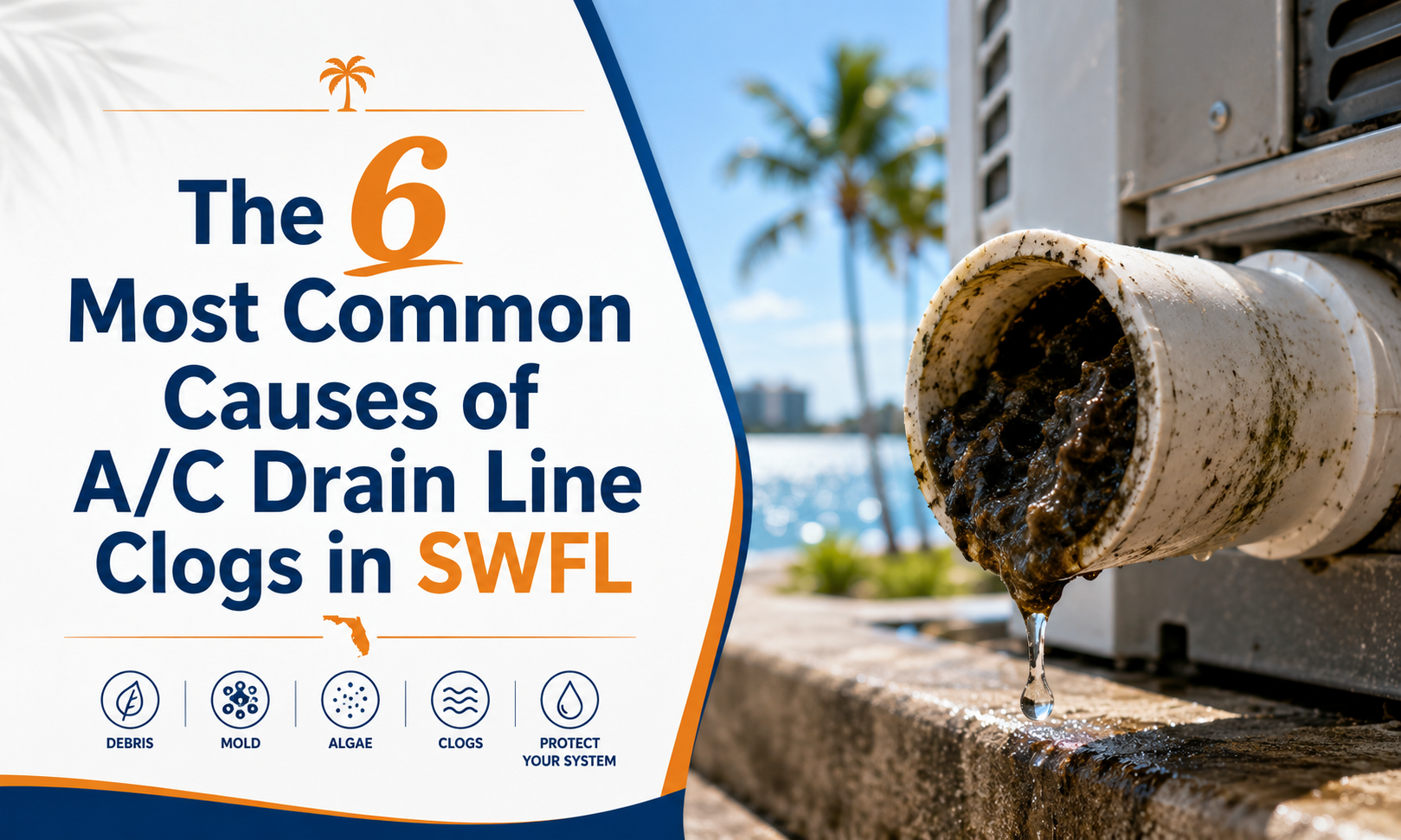
The 6 Most Common Causes of A/C Drain Line Clogs In Southwest Florida, your air conditioner does more than cool your home. It also removes a lot of humidity from the air. As your A/C pulls moisture out of your indoor air, that water has to drain somewhere. That is where your A/C drain line, also called the condensate drain line, comes in. When the drain line is clear, water safely flows away from the system. But when it becomes clogged, you may notice water leaking around your indoor unit, musty odors, a tripped float switch, or even a system that shuts off unexpectedly. In a humid area like Punta Gorda and the surrounding Southwest Florida communities, A/C drain line clogs are one of the most common service issues homeowners face. Here are six of the most common causes of A/C drain line clogs. 1. Algae Growth Inside the Drain Line Florida’s warm, humid climate creates the perfect environment for algae growth. Since your A/C drain line constantly handles moisture, algae can begin to build up inside the pipe over time. As it grows, it can slow the flow of water and eventually create a blockage. This is one of the biggest reasons routine A/C maintenance is so important in Southwest Florida. A professional drain line cleaning can help clear buildup before it turns into a larger problem. 2. Dirt and Dust From the A/C System Even with a good air filter, some dirt and dust can still make its way into your HVAC system. Over time, that debris can mix with condensation and collect in the drain pan or drain line. Once dust, moisture, and organic buildup combine, they can form a thick sludge that restricts water flow. Changing your air filter regularly can help reduce the amount of debris entering the system, but it does not completely eliminate the need for drain line maintenance. 3. A Dirty Evaporator Coil Your evaporator coil is the part of your air conditioning system that helps cool the air and remove moisture. If the coil becomes dirty, the condensation that drips off it can carry dirt and debris into the drain pan. From there, that debris can work its way into the condensate drain line. A dirty coil can also make your A/C work harder, reduce cooling performance, and contribute to other repair issues. If your drain line keeps clogging repeatedly, the problem may not be just the line itself. It could be connected to a dirty coil or another maintenance issue inside the system. 4. Mold and Mildew Buildup Because your A/C system constantly deals with moisture, mold and mildew can develop in damp areas such as the drain pan and condensate line. Once mold or mildew begins growing, it can create a sticky buildup that traps more dirt and debris. This can lead to slow drainage, unpleasant odors, and recurring clogs. If your home has a musty smell when the A/C runs, or if you notice water backing up near your indoor air handler, it may be time to have the system inspected. 5. Improper Drain Line Slope or Installation Issues Sometimes the problem is not just buildup inside the line. If the drain line was not installed with the proper slope, water may not flow out as easily as it should. Standing water inside the pipe gives algae, mold, and debris more time to collect. Older systems or drain lines that have shifted over time may also become more prone to clogs. If your A/C drain line seems to clog often, a technician can inspect the setup to see whether the line is draining properly or if there is another issue contributing to the problem. 6. Lack of Routine A/C Maintenance Many drain line clogs happen simply because the system has not been cleaned or maintained regularly. In Florida, your air conditioner runs for much of the year, which means the drain line is constantly working to remove moisture from your home. Without routine maintenance, algae, dust, dirt, and sludge can slowly build up until the line becomes blocked. Regular A/C tune-ups help catch these problems early and can reduce the risk of water damage, emergency repairs, and unexpected system shutdowns. Why A/C Drain Line Clogs Should Not Be Ignored A clogged A/C drain line may seem like a small issue at first, but it can quickly become a bigger problem. If the water has nowhere to go, it may back up into the drain pan, leak around your indoor unit, trigger the float switch, or cause your system to stop running. In some cases, a clogged drain line can also lead to ceiling damage, flooring damage, drywall stains, or mold concerns if the leak goes unnoticed. That is why it is important to address water leaks, repeated float switch trips, or musty smells as soon as possible. Schedule A/C Drain Line Cleaning in Punta Gorda, FL If your A/C drain line is clogged, leaking, or backing up, Birch’s Air can help. Our team provides professional A/C service, maintenance, and drain line cleaning for homeowners in Punta Gorda and the surrounding Southwest Florida area. Whether your air conditioner is leaking water, shutting off unexpectedly, or overdue for maintenance, we can inspect the system, clear the drain line, and help prevent the issue from coming back. To schedule service, contact Birch’s Air today and keep your cooling system draining properly all year long.
The 10 Most Common Questions SWFL Customers Forget to Ask When you need HVAC service in Southwest Florida, it is easy to focus on the obvious problem. Maybe the AC is not cooling, the electric bill is higher than normal, or the system is making a strange noise. Most homeowners call because they want the issue fixed quickly, which makes sense in a place like Punta Gorda, Port Charlotte, and North Port where dependable air conditioning matters for much of the year. But in the rush to schedule service, many customers forget to ask a few important questions. Those questions can make a big difference in the quality of service they receive, the long-term performance of their system, and the overall value they get from the work being done. Here are 10 of the most common questions Southwest Florida customers forget to ask before hiring an HVAC company. 1. Are you licensed and insured? This should always be one of the first questions. A licensed and insured HVAC company gives you more confidence that the work is being done professionally and responsibly. It also helps protect you if something goes wrong during the job. In Florida, this matters even more because HVAC systems work hard and need to be installed and serviced correctly. 2. How much experience do you have with systems in Southwest Florida? Not every HVAC company understands the demands that Southwest Florida weather puts on a system. Long cooling seasons, heavy humidity, salt air, and constant use can create different challenges than you would find in other parts of the country. A local company with years of experience in SWFL is often better prepared to recommend the right solutions for homes in this area. 3. Is this repair worth it, or should I start thinking about replacement? Many homeowners focus only on getting the immediate problem fixed, but it is smart to ask whether the repair makes sense long term. If your system is older, breaking down often, or struggling to keep up, it may be more cost-effective to start planning for replacement. A trustworthy HVAC company should be honest with you about whether a repair is the right move or just a temporary fix. 4. What caused this problem in the first place? A lot of customers ask, “Can you fix it?” but forget to ask, “Why did this happen?” That question matters because it can help prevent the issue from coming back. A clogged drain line, dirty coils, weak airflow, thermostat issues, or neglected maintenance can all lead to larger problems. Understanding the cause helps you make better decisions for your system moving forward.